


What to Expect from Cyware at Infosecurity Europe 2026

VP, Product Marketing, Cyware
Threat intelligence was once considered to be a visibility issue. If organizations could collect enough information, enrich their intelligence, and distribute it, then they would remain one step ahead. This model has broken down. As adversaries become more agile, adapt quickly, and leverage AI to accelerate reconnaissance and attack execution, businesses face a new level of challenge in defending their infrastructure.
This development has led to a transformation in the conversation about threat intelligence and collective defense. Companies are no longer interested in who has more feeds and larger volumes of indicators. Rather, the important factor now is whether intelligence can drive action at pace. This is where AI-powered collective defense comes in.
Infosecurity Europe 2026 arrives at exactly this inflection point. Cyware is attending to demonstrate why collective defense, powered by agentic AI, is how enterprises close that gap — and why it only works when intelligence moves beyond dashboard display to drive decisions. As agentic AI capabilities evolve, this conversation is accelerating.
What Security Teams Are Struggling With
A lack of information isn’t the culprit behind security professionals’ challenges. Rather, the problem stems from the large volume of information that doesn’t translate to timely action.
Security operations teams know this problem well. Threat intelligence arrives in one platform, a notification fires somewhere else, and analysts spend cycles making connections that should already be made. The intelligence exists; the gap is between knowing and acting.
The problem has become harder to overlook as security teams ingest telemetry data from cloud environments, identities, SaaS applications, third-party data sources, and internal tools. Despite significant investment by enterprises in threat intelligence management over the past few years, analysts still spend too much time verifying and correlating data before taking effective action.
Agentic AI-assisted threat intelligence has become part of the debate because cybersecurity executives need solutions that help with context gathering, triage, enrichment, and coordination without creating additional friction for operations. Naturally, there are concerns about AI-generated outputs, particularly in stressful situations, where false alarms can have severe ramifications, underscoring the importance of human judgment.
Why Infosecurity Europe 2026 is Worth Your Time This Year
Infosecurity Europe 2026 is where the people making actual procurement, architecture, and policy decisions show up in the same room. Buyers, operators, researchers, and builders are there to scrutinize, compare, and decide, not just fill a seat in a panel room. This is particularly true in 2026, when decisions about AI in the SOC have moved from theoretical to operational.
Cyware’s conversations will focus on the operational reality security teams now face. On June 3, Sachin Jade will deliver a keynote at Stand G20 examining collective defense and the growing weaponization of AI, including how threat actors are using automation to accelerate reconnaissance, targeting, and adaptation. We will also co-host an interactive workshop with SOCRadar focused on putting AI to practical use inside intelligence and response operations.
Sessions like these are important because of the conversations they fuel afterward. Practitioners will be able to compare operational realities, discuss what still breaks under pressure, and share where existing workflows continue to slow teams down.
What You’ll See at Booth #A138
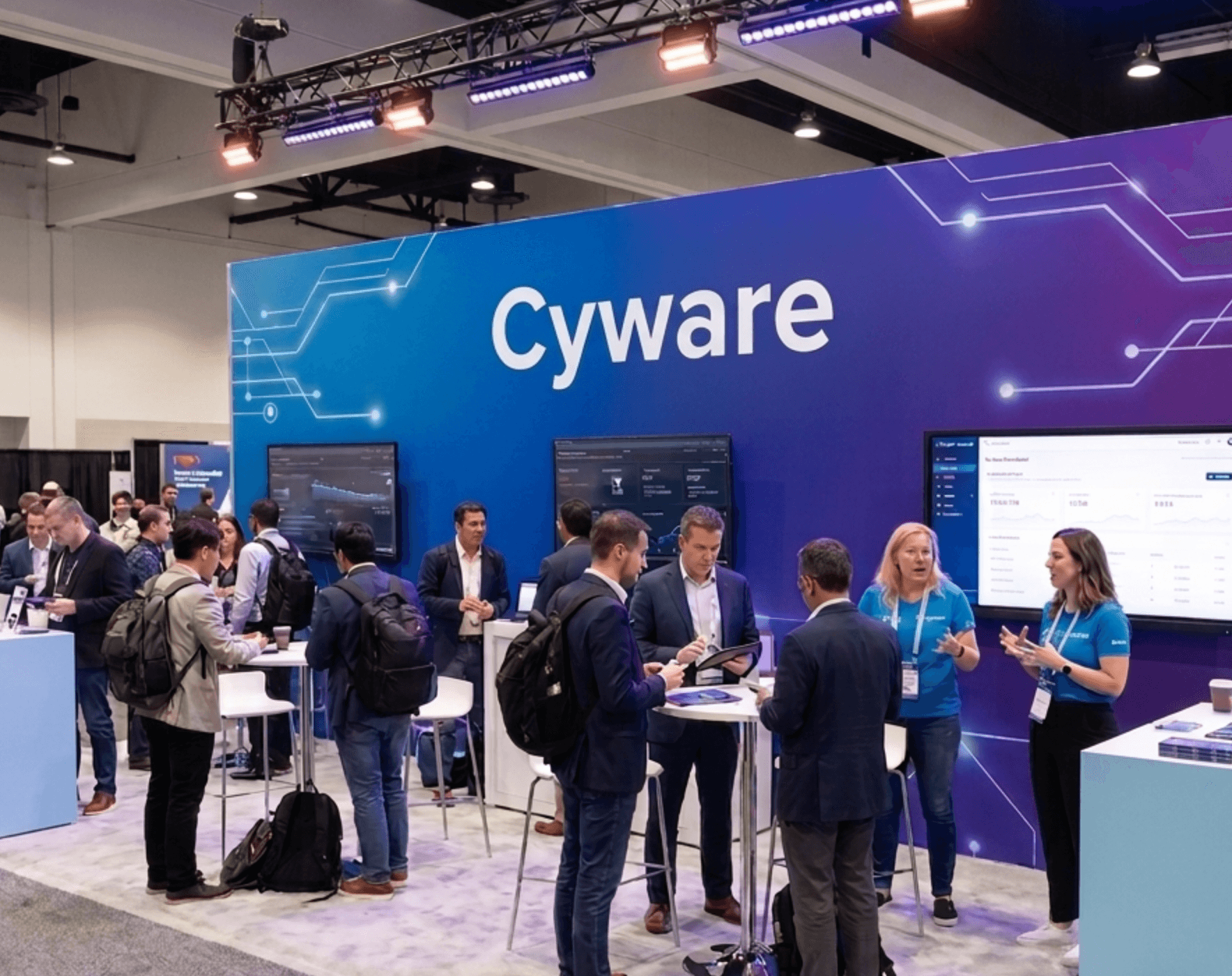
Visitors stopping by Cyware at Booth #A138 will see this operational focus carried through in demos. Instead of presenting threat intelligence as just one more passive stream of information, we will reveal what happens when it actively drives response workflows across teams and systems.
This covers examples of intelligence enrichment, automated correlation, coordinated collaboration for response, and AI-based efforts to decrease the time gap between threat detection and action. The point isn't automation as a concept; it's what becomes possible when analysts stop manually shuttling data between disconnected tools while attackers are already moving.
If you want to pressure-test ideas with practitioners working through the same problems, it's worth stopping by.
Cyware will be at ExCeL London, Booth #A138, between June 3 to 5, 2026. Plan ahead, and book some time with the team before the floor gets busy.
Frequently Asked Questions:
When and where is Infosecurity Europe 2026 taking place?
Infosecurity Europe 2026 takes place from June 3 to June 5, 2026, at the ExCeL London exhibition center.
Where can I find Cyware at Infosecurity Europe 2026?
You can visit Cyware at Booth #A138 on the main exhibition floor. Additionally, Cyware will be presenting a keynote session at Stand G20.
What is Cyware’s primary focus at Infosecurity Europe 2026?
Cyware’s focus is on agentic AI-powered collective defense. They will demonstrate how security operations teams can move threat intelligence beyond passive dashboards and use it to drive automated, rapid-response workflows.
What sessions will Cyware host during the event?
Cyware is hosting two major sessions on June 3, 2026:
Keynote Presentation: Sachin Jade will speak at Stand G20 regarding collective defense and the weaponization of AI by threat actors.
Interactive Workshop: A collaborative workshop co-hosted with SOCRadar, focusing on putting AI to practical use inside intelligence and response operations.
About the Author
Patrick Vandenberg
VP, Product Marketing, Cyware