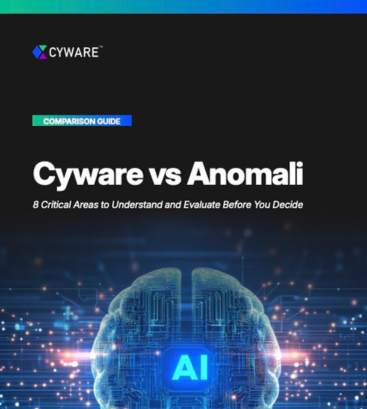
Cyware vs. Anomali: Threat Intelligence Platform Comparison Guide
The Cyware vs. Anomali Comparison Guide examines eight critical areas to help you understand the differences between the two approaches and determine which platform better aligns with your threat intelligence and security operations requirements.
In This Guide, You’ll Discover:
How Cyware and Anomali approach threat intelligence management and operationalization
How the platforms compare across automation, integrations, and security workflows
The differences in their approaches to AI and agentic capabilities
How each platform supports threat intelligence sharing and collaboration
What to consider when evaluating openness, interoperability, and vendor lock-in
Which capabilities matter when moving from threat intelligence to operational action
Download Now!
Trusted by the world's leading organizations
Look Beyond the Feature Checklist
Cyware and Anomali may look similar on paper, but their approaches to managing and operationalizing threat intelligence differ.
Use this guide to compare them across eight critical areas:
Unified Threat Intelligence Management — Manage intelligence across the complete lifecycle.
Deep Automation — Reduce manual work and streamline security workflows.
Agentic AI — Compare AI capabilities for multi-step intelligence workflows.
Operationalized Threat Intelligence — Turn intelligence into faster security action.
Sharing & Collaboration — Share intelligence across teams and trusted communities.
Open Architecture — Integrate diverse data sources and security technologies.
Security Ecosystem Integration — Connect intelligence across your security stack.
Scalability — Support growing data volumes, use cases, and operational needs.
Cyware has served as the MTS-ISAC's information sharing platform and intelligence repository for over three years. The MTS-ISACʼs SOC leverages the platform to curate cyber threat intelligence, while our maritime stakeholders benefit from its ability to support both human and automated consumption. We are grateful for the continued partnership, which has enabled us to make sense of data faster and act in more precise, impactful ways.
VP of Operations, MTS ISAC

The Cyware platform is easy to navigate, and a simple search of 'finance' is enough to determine whether there are any cyberattacks we need to be aware of. With previous providers, I would have had to create a very specific query and manually search for specific keywords in titles and bodies of text. With Cyware, this data is held in one place.
Cyber Threat Hunt Specialist, Quilter