


What Is Low-Code Security Automation?
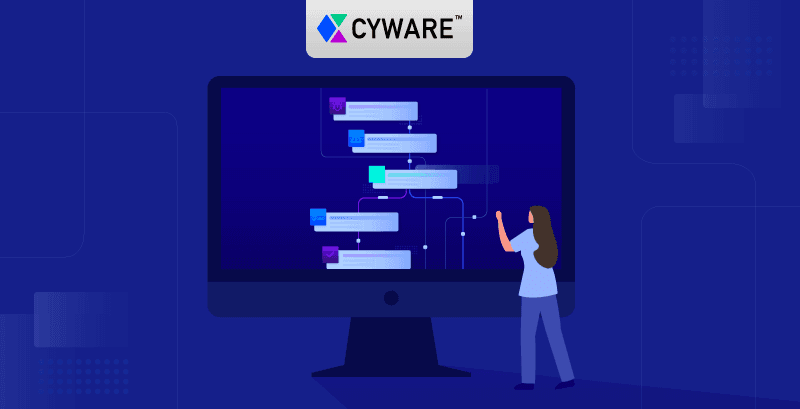
Low-code security automation lets security teams build and enhance automated workflows using visual, drag-and-drop editors instead of writing everything from scratch. As attack surfaces expand and the cybersecurity skills gap widens, teams need to process more data and respond faster than manual scripting allows. Low-code automation answers that pressure, enabling analysts at any skill level to build response workflows quickly while still leaving room for custom code where it is needed.
This guide explains what a low-code automation platform is, how low-code differs from no-code, why businesses adopt it, and the security use cases where it delivers the most value.
What Is a Low-Code Automation Platform?
A low-code automation platform allows users with very little programming experience to create or enhance applications and build automated workflows on visual, drag-and-drop editors. These platforms ship with pre-built modules, functionality, and rules for common use cases and repeatable actions that can be combined quickly into complete workflows and services. When needed, more skilled developers can extend them with custom, hand-coded features later, so the platform scales from simple automation to sophisticated, tailored solutions.
Low-Code vs No-Code
Unlike no-code security automation, which limits teams to what the platform provides out of the box, low-code development allows custom coding alongside visual editing. That gives users greater control to tailor workflows to their specific requirements, increasing development speed and efficiency without sacrificing quality, visibility, or control. Low-code also tends to see stronger adoption among skilled developers, who may hesitate to work in pure no-code environments because of limited control over raw code and the inability to debug effectively.
Why Businesses Adopt Low-Code
Low-code automation enables digital transformation at speed and scale without heavy investment in complex software engineering. Early adopters have seen significant return on investment, reduced dependence on highly skilled developers, and improved productivity and time-to-value. By enabling users from diverse backgrounds and minimal technical experience to build programs that address a wide range of use cases, organizations ease the talent shortage while remaining competitive.
In cybersecurity specifically, speed of response can be decisive. With low-code automation, security teams can use built-in integrations or easily build their own between security, IT, and DevOps tools to streamline workflows, eliminate console-switching, and enable faster threat investigation and response. Tighter integrations also support more effective real-time collaboration and incident management, all built on security orchestration, automation, and response.
Low-Code Use Cases
Low-code security automation supports a wide range of SOC use cases. Three of the most common are workflow automation, integrations, and alert triage.
Workflow automation
Low-code playbooks let analysts at any level build automated workflows for faster, more consistent response. Playbooks organize threat-response tasks – manual, automated, or a mix – into repeatable workflows, so teams no longer need to write complex scripts to automate repetitive tasks. This reduces false positives analysts must handle, lowers alert fatigue, and frees skilled staff for deeper analysis and strategy.
Integrations
Vendor-agnostic orchestration is what makes low-code automation shine. Using built-in or custom integrations across the IT and security tool stack, teams connect detection, intelligence, and response tools so they interoperate in real time. Because low-code solutions are usually cloud-delivered with short deployment times, teams can focus on designing optimal workflows rather than complex implementation and scripting.
Alert triage
Alert triage is one of the highest-value use cases. Low-code automation can enrich and prioritize alerts, sandbox suspected malicious files, update allowlists and blocklists based on confidence scores, and automate phishing detection and investigation – minimizing the noise analysts face and directing attention to the alerts that matter. Additional use cases include vulnerability management and asset discovery, automated reporting, blocking malicious indicators, and structured and unstructured data ingestion.
Delivered as part of a broader SOAR capability, low-code automation directly reduces mean time to detect (MTTD) and mean time to respond (MTTR). The Cyware Intelligence Suite provides low-code and no-code automation across security and IT infrastructure, with a large library of app integrations, ready-made playbooks, and a visual playbook canvas for drag-and-drop workflow creation, integrating real-time threat intelligence across every security function.
To see low-code security automation in action, book a demo.
Frequently Asked Questions
1) What is low-code security automation?
Low-code security automation is the practice of building and enhancing security workflows using visual, drag-and-drop editors with minimal hand-coding. It combines pre-built modules with the option to add custom code, letting analysts at any skill level automate detection, investigation, and response.
2) How is low-code different from no-code security automation?
No-code automation limits users to the platform’s built-in capabilities, while low-code allows custom coding alongside visual editing. That gives teams more control and flexibility to tailor workflows, and tends to see stronger adoption among developers who want the ability to extend and debug automation.
3) What can low-code SOAR automate?
Low-code SOAR can automate alert triage, sandboxing of suspicious files, allowlist and blocklist updates, phishing detection and investigation, vulnerability management, automated reporting, blocking of malicious indicators, and ingestion of structured and unstructured data, among other repetitive SOC tasks.
4) Why do security teams adopt low-code automation?
Teams adopt low-code automation to respond faster, reduce alert fatigue and analyst burnout, and lower the cost of effective defense. It lets analysts of any skill level build workflows, eases the security talent shortage, and increases return on existing security tools through easier integration.
5) Is low-code suitable for complex environments?
Yes. Because low-code platforms allow custom coding on top of visual workflows and integrate across diverse security and IT tools, they scale from simple automation to sophisticated, tailored solutions, making them suitable for complex, multi-tool enterprise environments.