


Top Threat Intelligence Platforms in 2026: Features, Comparison, and How to Choose
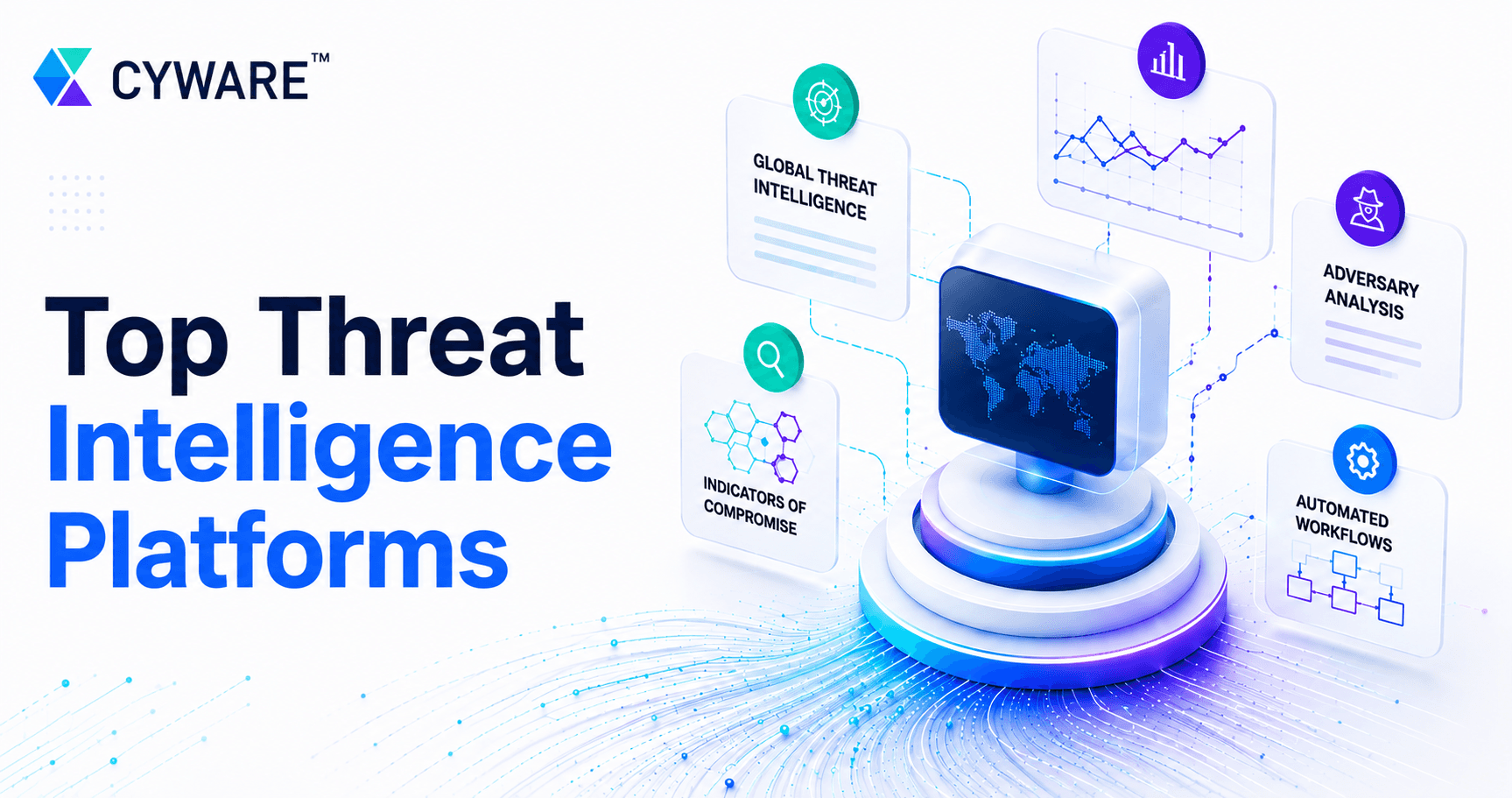
Threat intelligence teams do not have a shortage of data. They have a prioritization problem. The IBM X-Force 2026 Threat Intelligence Index found a 44% year-over-year increase in attacks that began with the exploitation of public-facing applications. IBM also found that 56% of disclosed vulnerabilities analyzed did not require authentication to exploit successfully.
Adversaries are also moving faster. According to the CrowdStrike 2026 Global Threat Report, attacks involving AI-enabled adversaries increased 89%, while the average eCrime breakout time fell to 29 minutes in 2025. The fastest observed breakout took only 27 seconds.
For security teams, the implication is straightforward: collecting more indicators is not enough. Organizations need to know which threats matter to them, how those threats relate to their assets and vulnerabilities, which adversaries are involved, whether external intelligence matches internal activity, and what action should follow.
This is where modern threat intelligence platforms have evolved considerably. The top threat intelligence platforms in 2026 go beyond distributing malicious IP addresses, URLs, domains, and file hashes. They increasingly support intelligence collection, enrichment, correlation, adversary analysis, vulnerability prioritization, threat hunting, digital risk monitoring, intelligence sharing, workflow automation, and AI-assisted decision-making.
The market itself reflects that expansion. Gartner's May 2026 research uses the category Cyberthreat Intelligence Technologies, describing the challenge as helping cybersecurity leaders understand which threats represent real concerns and operationalize threat data across their security programs.
This guide examines top ten threat intelligence platforms in 2026, where each one fits, how their capabilities differ, which open-source options deserve consideration, and what enterprises should evaluate before making a purchase.
Not sure what separates the right TIP from the rest? Our Threat Intelligence Platform Buyer’s Guide walks through the capabilities to prioritize, the questions worth asking, and the key considerations to keep in mind as you evaluate your options.
Why Threat Intelligence Requirements Are Becoming More Complex
A few years ago, many organizations approached cyber threat intelligence primarily as an indicator problem. Security teams subscribed to threat intelligence feeds containing malicious IP addresses, domains, file hashes, URLs, and other indicators of compromise, then pushed them into SIEMs, firewalls, EDR systems, or blocklists.
That model still has value, but indicators are often short-lived. Adversaries can quickly rotate infrastructure, domains, malware, credentials, and cloud resources. Security teams therefore need intelligence that provides context around adversaries, TTPs, vulnerabilities, campaigns, organizational exposure, and the relationships between them.
5 Questions Modern Threat Intelligence Should Answer
When evaluating a threat intelligence platform, consider whether it can answer questions such as:
Which adversaries, campaigns, and TTPs are most relevant to our organization?
Which vulnerabilities and external threats create meaningful exposure for us?
Are our credentials, assets, executives, suppliers, or brand appearing in malicious activity?
Which intelligence is reliable and relevant enough to guide detection, threat hunting, or automated action?
How can relevant intelligence be shared and operationalized across security teams, tools, and trusted partners?
Answering these questions requires more than collecting feeds. A mature threat intel platform needs to bring together multiple intelligence sources, normalize and enrich the data, correlate related entities, prioritize relevant threats, and deliver useful context to the teams and systems that can act on it.
This is why modern threat intelligence management should ultimately be evaluated by outcomes, not feed volume. The more useful question is: How effectively does the platform convert threat data into better security decisions?
Top Threat Intelligence Platforms: 2026 Comparison
Platform | Best For | Primary Strength | Model | Key Differentiator |
Cyware | Enterprise CTI operations | Intelligence management, enrichment, sharing, automation, and action | Commercial | Unified threat intelligence operationalization and Cyware AI |
Google Threat Intelligence | Malware and adversary investigation | Mandiant, VirusTotal, Google intelligence, and Gemini | Commercial | Deep technical and frontline threat intelligence |
CrowdStrike Falcon Adversary Intelligence | Adversary-centric security operations | Threat actor intelligence and threat hunting | Commercial | Intelligence closely integrated with Falcon |
ThreatConnect / Dataminr | Mature CTI programs | Structured intelligence workflows and automation | Commercial | TIP workflows combined with real-time and agentic intelligence |
Anomali ThreatStream | Intelligence-driven SOCs | CTI, security analytics, and agentic AI | Commercial | Intelligence and SOC convergence |
Flashpoint Ignite | Cybercrime and dark web intelligence | External and primary-source intelligence | Commercial | Deep visibility into adversary ecosystems |
CloudSEK XVigil | Digital risk protection | External threat and exposure monitoring | Commercial | Organization-specific external risk intelligence |
Cyble Vision | External threat visibility | Dark web, brand, attack surface, and CTI | Commercial | Broad AI-native external intelligence |
IBM X-Force | Intelligence plus analyst expertise | Threat research and managed intelligence | Commercial/services | Human expertise and global security research |
OpenCTI | Custom CTI environments | Threat knowledge management | Open source/commercial options | Flexible STIX-based intelligence architecture |
No comparison table can capture every deployment consideration. What it can do is provide a quick view of where each platform is strongest and help narrow the options worth exploring in more detail.
The best threat intelligence platform is not defined by a single set of capabilities. A financial institution focused on fraud, stolen credentials, and criminal marketplaces may have very different requirements from a threat hunting team investigating malware and adversary TTPs. An ISAC may prioritize intelligence sharing and collaboration, while an enterprise already invested in the CrowdStrike or Google ecosystem may place greater value on native integrations and existing security telemetry.
The right choice ultimately depends on what you need threat intelligence to accomplish. With those differences in mind, let's take a closer look at each of the top threat intelligence platforms in 2026 and where they fit best.
Top 10 Threat Intelligence Platforms in 2026
The platforms below address different parts of the cyber threat intelligence lifecycle. Some are strongest as enterprise TIPs, while others differentiate through adversary research, malware intelligence, dark web visibility, external digital risk, security operations integration, or open-source intelligence management. The order should therefore be treated as an editorial shortlist rather than a claim that one product will be the best choice for every organization.
1. Cyware
Best for: Enterprises looking to unify threat intelligence management, enrichment, sharing, automation, and intelligence-led security action.
Key differentiator: Unified threat intelligence management that connects enrichment, sharing, automation, AI, and downstream security action.
Cyware takes an operational approach to threat intelligence, focusing on what happens between collecting intelligence and taking action. Its Unified Threat Intelligence Management approach covers the intelligence lifecycle from ingestion and normalization through enrichment, correlation, prioritization, sharing, and action. This is particularly useful for enterprises combining commercial feeds, open-source intelligence, ISAC or ISAO data, internal telemetry, vulnerability information, malware research, and intelligence generated by their own security teams.
A notable strength is the connection between intelligence management and security operations. Cyware is designed to help CTI teams turn intelligence into context that can support SOC investigations, threat hunting, incident response, detection engineering, and intelligence sharing. This makes it relevant not only for enterprise CTI teams but also for organizations and communities that need to distribute intelligence among trusted participants.
Cyware is also extending this model through Cyware AI, with purpose-built AI agents designed to contextualize threats, prioritize relevant risks, and automate threat action. The progression toward agentic workflows is significant because it can potentially reduce the analyst effort required to move from enrichment to investigation and downstream action. Organizations considering Cyware should still define clear Priority Intelligence Requirements, confidence thresholds, sharing policies, and automation controls before scaling these workflows.
2. Google Threat Intelligence
Best for: Organizations prioritizing adversary intelligence, malware analysis, technical investigation, and frontline threat research.
Key differentiator: The combined intelligence value of Mandiant, VirusTotal, Google telemetry, and Gemini-assisted investigation.
Google Threat Intelligence combines Google's security visibility with Mandiant's frontline threat intelligence and VirusTotal's malware and artifact intelligence. This combination makes it particularly useful when analysts need to move beyond determining whether an indicator is malicious and understand the malware, infrastructure, campaigns, threat actors, and behaviors connected to it.
Google also integrates Gemini into threat intelligence workflows. Analysts can use AI-assisted investigation to explore threat actors, associations, behavioral patterns, and MITRE ATT&CK TTPs. Google Security Operations documentation shows how Gemini can support natural-language threat intelligence queries, potentially reducing the manual effort required to navigate complex intelligence relationships.
The platform is particularly compelling for malware analysts, threat hunters, incident responders, detection engineers, and organizations already invested in Google's security ecosystem. Teams whose primary requirements involve highly customized intelligence sharing or traditional feed-management workflows should evaluate those capabilities separately.
3. CrowdStrike Falcon Adversary Intelligence
Best for: Organizations that want adversary-centric intelligence closely connected to detection, hunting, endpoint, identity, and cloud security.
Key differentiator: Deep adversary intelligence combined with close integration into detection, threat hunting, and the wider Falcon security ecosystem.
CrowdStrike Falcon Adversary Intelligence focuses heavily on understanding the adversary behind malicious activity. Its intelligence covers threat actors, infrastructure, malware, vulnerabilities, and behavioral techniques. CrowdStrike reported in its 2026 Global Threat Report findings that it named 24 new adversaries during 2025, bringing the total it tracked to more than 281.
This adversary-centric approach can provide more durable intelligence than relying solely on IOCs. Domains, IP addresses, and malware hashes may change quickly, while knowledge of an adversary's credential-access, persistence, lateral-movement, and exfiltration techniques can support longer-term detection and hunting. CrowdStrike can also prioritize intelligence using organizational context such as industry, technology stack, detections, and observed activity, according to its personalized adversary intelligence documentation.
The platform is particularly attractive to organizations already using the Falcon ecosystem because intelligence can inform endpoint investigations, threat hunting, detection engineering, identity security, vulnerability prioritization, and incident response.
4. ThreatConnect
Best for: Mature CTI programs that need structured intelligence operations, reusable workflows, automation, and operational integration.
Key differentiator: Mature threat intelligence workflow management that is now becoming part of Dataminr's wider agentic cyber-defense strategy.
ThreatConnect has traditionally focused on formalizing the threat intelligence lifecycle, including aggregation, enrichment, analysis, case management, automation, threat hunting support, and dissemination. That makes it useful for established CTI teams that need repeatable processes for assessing intelligence, connecting related information, escalating findings, and distributing intelligence to operational teams.
The platform's direction changed significantly after Dataminr announced its agreement to acquire ThreatConnect in October 2025. Dataminr is now combining ThreatConnect's intelligence management capabilities with real-time external intelligence and agentic AI. Its Agentic Threat Intelligence Platform is designed to turn investigations into structured intelligence that can be scored, routed, and reused across threat hunting, detection, incident response, and reporting.
This combination makes ThreatConnect particularly interesting for mature CTI programs, although prospective customers should evaluate how the Dataminr roadmap affects product architecture, packaging, integrations, and licensing.
5. Anomali ThreatStream
Best for: Enterprises that want threat intelligence closely connected with security data, detection, investigation, and AI-driven security operations.
Key differentiator: The convergence of threat intelligence, security telemetry, analytics, and agentic security operations.
Anomali ThreatStream is evolving from a conventional TIP toward a broader intelligence-centric security operations model. ThreatStream Next-Gen connects threat intelligence with security data and AI-assisted workflows, helping intelligence teams, SOC analysts, threat hunters, and detection engineers work from a more consistent intelligence foundation.
Anomali also supports automated Priority Intelligence Requirements. Its ThreatStream Next-Gen PIR capabilities are designed to turn PIRs into continuously monitored intelligence workflows. In May 2026, Anomali also announced autonomous capabilities for triage, scoring, and investigation, with further response automation and analyst oversight planned as part of its agentic strategy.
Anomali is particularly relevant for organizations that want CTI to directly influence SOC investigation, threat hunting, detection engineering, and security analytics rather than operating as a separate intelligence function.
6. Flashpoint Ignite
Best for: Organizations that need deep external intelligence, dark web visibility, cybercrime intelligence, fraud intelligence, and vulnerability context.
Key differentiator: Deep primary-source and external intelligence across cybercrime, fraud, vulnerabilities, credentials, and broader organizational risks.
Flashpoint Ignite differentiates through external and primary-source intelligence, giving organizations visibility into areas such as underground communities, criminal marketplaces, stolen credentials, ransomware activity, fraud ecosystems, threat actor discussions, and vulnerabilities of interest to attackers. This makes it particularly relevant to financial services, government, retail, technology companies, and organizations facing substantial external digital risk.
The scale of the information available in criminal ecosystems illustrates why this visibility matters. Flashpoint's 2026 Global Threat Intelligence Report states that it observed more than 11.1 million machines infected with infostealers in 2025, contributing to an inventory of approximately 3.3 billion stolen credentials and cloud tokens.
Flashpoint also places significant emphasis on Priority Intelligence Requirements, encouraging organizations to connect collection to specific risks and decisions rather than broadly "monitoring the dark web." It is especially well suited to cybercrime intelligence, fraud prevention, credential monitoring, vulnerability intelligence, and dark web investigation. Organizations primarily looking for internal TIP workflow management should determine whether Flashpoint will be their core platform or a specialized intelligence source feeding another system.
Key differentiator: Deep primary-source intelligence across cybercrime, fraud, credentials, vulnerabilities, and adversary ecosystems.
7. CloudSEK XVigil
Best for: Organizations prioritizing digital risk protection, dark web monitoring, leaked credentials, brand abuse, and external exposure.
Key differentiator: Organization-specific external digital risk intelligence across surface, deep, and dark web sources.
CloudSEK XVigil focuses on threats outside the traditional enterprise perimeter. It monitors surface, deep, and dark web sources for risks involving an organization's assets, employees, customers, executives, and brand. This can help uncover compromised credentials, phishing infrastructure, lookalike domains, data leaks, brand impersonation, and threat actor discussions that may not appear in internal security telemetry.
CloudSEK's wider strategy connects cyber threat intelligence with digital risk protection, attack-surface monitoring, supply-chain intelligence, and AI-assisted investigation. This reflects a broader shift in the market toward correlating external threat activity with the assets and exposures that matter to a specific organization.
XVigil is particularly suitable for organizations prioritizing dark web monitoring, credential exposure, brand protection, phishing detection, executive monitoring, and third-party risk. Teams looking for extensive internal intelligence lifecycle management should evaluate whether it can serve as their primary TIP or works better alongside one.
8. Cyble Vision
Best for: Enterprises and public-sector organizations seeking broad external threat intelligence, dark web monitoring, attack-surface visibility, and digital risk protection.
Key differentiator: Broad external intelligence and digital risk coverage combined with an AI-native architecture.
Cyble Vision combines cyber threat intelligence with external risk monitoring across surface, deep, and dark web sources. Its capabilities span threat intelligence, credential exposure, brand monitoring, attack-surface visibility, vulnerability context, and threat hunting, making it useful for organizations that want to consolidate several external intelligence functions.
The value comes partly from correlation. A lookalike domain may be suspicious on its own, but it becomes more important when connected with a phishing campaign, exposed employee credentials, or related threat actor activity. Cyble also positions Vision as AI-native and connects it with its Blaze AI capabilities for threat hunting, correlation, investigation, and response workflows.
The platform is therefore particularly relevant for dark web intelligence, brand protection, credential monitoring, attack-surface management, vulnerability intelligence, and external threat hunting. Organizations should still determine whether external threat visibility or internal CTI management is their primary requirement when comparing it with traditional TIPs.
9. IBM X-Force Threat Intelligence
Best for: Enterprises that want analyst-led cyber threat intelligence services combined with research, malware expertise, and exposure intelligence.
Key differentiator: Analyst-led threat intelligence combined with IBM's broader security research and services capabilities.
IBM X-Force Threat Intelligence Services is particularly relevant for organizations that need experienced analysts alongside threat intelligence technology. IBM states that X-Force analysts use sources including malware reverse engineering, dark web research, and vulnerability tracking to help organizations understand evolving threats.
The service can support malware analysis, threat actor research, cyber exposure analysis, intelligence sharing, incident response, and strategic intelligence. This human element can be valuable when evidence is incomplete or organizations need help determining what a threat means to their environment rather than simply receiving another feed of indicators.
X-Force can therefore be a strong option for enterprises with limited internal CTI capacity or those that want analyst expertise alongside their existing security operations. Buyers should distinguish between IBM's intelligence services, research, consulting, and technology capabilities when comparing it with standalone TIP products.
10. OpenCTI
Best for: Organizations that want a flexible, extensible threat intelligence knowledge platform and have the technical resources to operate it.
Key differentiator: A flexible STIX-based threat intelligence knowledge model with strong relationship mapping and extensibility.
OpenCTI provides a flexible way to build and manage a threat intelligence knowledge base. According to the OpenCTI data model documentation, its model is based on STIX 2.1 and supports entities and relationships involving threat actors, malware, attack patterns, observables, sightings, campaigns, and other CTI information.
Its relationship-centric approach is particularly valuable for investigations. Instead of treating an IP address, malware sample, campaign, threat actor, and ATT&CK technique as disconnected records, teams can map the relationships among them and build a richer picture of the threat. OpenCTI also supports multiple ingestion and exchange mechanisms, including connectors, live streams, TAXII, RSS, and CSV feeds, as described in its automated import documentation.
OpenCTI is well suited to dedicated CTI teams, threat researchers, government organizations, threat hunters, and organizations building customized intelligence architectures. Its flexibility comes with operational responsibility, however, including infrastructure, scaling, connector management, updates, security, and administration.
How We Evaluated the Best Threat Intelligence Platforms
We evaluated the platforms based on the capabilities that determine how effectively they can turn threat data into actionable intelligence:
Multi-source threat intelligence collection: The ability to bring together commercial feeds, open-source intelligence, vendor research, ISAC/ISAO data, vulnerability information, dark web sources, and internal security telemetry.
Normalization, deduplication, and enrichment: How effectively the platform cleans up overlapping data, enriches indicators with additional context, preserves provenance, and connects related intelligence.
Threat actor and TTP intelligence: Support for investigating adversaries, campaigns, malware, infrastructure, and tactics, techniques, and procedures rather than relying primarily on short-lived IOCs.
Vulnerability and exposure intelligence: The ability to add exploitation activity, threat actor interest, malware associations, and organizational exposure to vulnerability prioritization.
Threat intelligence monitoring and digital risk protection: Visibility into external risks such as compromised credentials, dark web activity, data leaks, brand impersonation, malicious domains, and third-party threats.
Integrations and intelligence sharing: The depth of integration with SIEM, SOAR, EDR/XDR, vulnerability management, and other security systems, along with support for intelligence exchange through standards such as STIX and TAXII.
AI-assisted analysis and automation: How effectively AI supports enrichment, correlation, prioritization, investigation, threat hunting, reporting, and workflow automation while maintaining appropriate analyst oversight.
These criteria provide a useful starting point, but every organization's intelligence requirements are different.
For a more practical assessment of vendors during demos, proofs of concept, and procurement, use our TIP Buyer's Checklist to evaluate the capabilities that matter most to your environment.
Best Open Source Threat Intelligence Platforms
Commercial cyber threat intelligence software often combines proprietary intelligence, analyst research, vendor support, integrations, and managed services. Open-source platforms offer a different value proposition: flexibility, transparency, extensibility, and greater control over intelligence architecture.
OpenCTI
Best for: Dedicated CTI teams that want control over their intelligence architecture and have resources to operate the platform.
OpenCTI is particularly strong when organizations want to build a structured threat intelligence knowledge base. Its data model is based on STIX 2.1 and is designed to represent relationships among actors, malware, attack patterns, observables, sightings, and other CTI objects.
That relationship model makes OpenCTI useful for long-term intelligence analysis rather than simple indicator storage. Teams can use it to investigate relationships across campaigns, threat actors, infrastructure, malware, vulnerabilities, and behaviors. Its flexible ingestion and sharing model also allows technically sophisticated teams to integrate intelligence from multiple sources.
MISP
Best for: CERTs, CSIRTs, governments, security communities, enterprises, and research groups that prioritize intelligence sharing and IOC correlation.
MISP is another foundational open-source option, but its strongest use case is slightly different. The MISP project describes the platform as open-source software for collecting, storing, distributing, and sharing cybersecurity indicators and threats. Its functionality includes sharing, storing, correlating, and structuring threat information across communities.
MISP is particularly valuable for intelligence-sharing communities. A CERT or ISAC may want multiple participating organizations to exchange information about campaigns, vulnerabilities, indicators, and malware. A traditional enterprise TIP may prioritize internal analyst workflows, while MISP places collaboration much closer to the center of the model.
AlienVault OTX
AlienVault Open Threat Exchange, now operated within LevelBlue, is better understood as an open threat intelligence community and source than as a full substitute for every TIP capability. LevelBlue describes Open Threat Exchange as an open threat intelligence community built around "Pulses" that contain IOCs such as malicious IP addresses, file hashes, domains, and CVEs.
LevelBlue reported in January 2026 that OTX had approximately 330,000 threat researchers across 140 countries contributing threat information. That can make OTX a useful intelligence source, particularly for smaller teams or organizations building a multi-source collection strategy.
The distinction matters: an intelligence source gives you threat data, while a threat intelligence platform helps determine what that data means, how reliable it is, how it relates to other intelligence, and what should happen next.
How to Choose the Best Threat Intelligence Platform for Your Organization
Choosing a threat intelligence platform should start with what your organization needs intelligence to accomplish, not with the longest feature list. Focus on these factors when comparing your options:
Define your Priority Intelligence Requirements (PIRs): Identify the security questions your CTI program needs to answer, such as which adversaries target your industry, which vulnerabilities are being actively exploited, or whether employee credentials are circulating in criminal ecosystems. PIRs help connect intelligence collection to actual security decisions.
Evaluate intelligence quality, not just quantity: More feeds and indicators do not necessarily mean better intelligence. Assess relevance, timeliness, provenance, confidence, context, and actionability. The strongest intelligence should help teams make better decisions about detection, hunting, vulnerability prioritization, investigation, or response.
Check integration with your security stack: Determine how well the platform works with your SIEM, SOAR, EDR/XDR, vulnerability management, identity, cloud, firewall, and other security systems. Look beyond the number of advertised integrations and evaluate what data and actions can actually move between systems.
Balance automation with analyst control: Automation can reduce repetitive work such as ingestion, enrichment, deduplication, scoring, routing, and IOC distribution. For higher-impact actions, evaluate confidence thresholds, approval controls, auditability, exceptions, and rollback. This becomes particularly important as platforms introduce agentic AI.
Test analyst workflows and scalability: Use realistic scenarios during a proof of concept. Give the platform a suspicious domain, vulnerability, malware sample, or threat actor and see how easily analysts can investigate relationships, assess relevance, collaborate, and operationalize the findings. Test performance at the data volumes your CTI program expects to handle.
Calculate total cost, not just licensing: Consider intelligence feeds, additional modules, APIs, integrations, implementation, infrastructure, administration, training, analyst resources, and ongoing maintenance. Open-source software can reduce licensing costs, but it still requires resources to deploy, secure, integrate, and operate.
These factors can help narrow the field, but selecting and implementing a TIP involves deeper technical, operational, and procurement considerations.
Use our TIP Buyer's Guide for a more detailed framework to define requirements, compare vendors, run proofs of concept, and choose a platform that fits your security operations.
Conclusion: Choose Intelligence That Changes Security Decisions
The top threat intelligence platforms in 2026 show how far the market has moved beyond basic IOC feeds. Modern platforms increasingly combine intelligence collection, enrichment, correlation, threat hunting, external risk visibility, automation, and AI to help security teams understand which threats actually matter.
But the best platform will depend on what your organization needs intelligence to accomplish. A smaller security team may benefit from threat intelligence as a service, while an enterprise SOC may prioritize automated enrichment and integrations. Mature CTI teams may need deeper intelligence management, sharing, adversary context, and automation.
The buying decision should therefore start with one question: What security decisions do we need threat intelligence to improve?
For mature security teams, the strongest approach is increasingly a unified threat intelligence model that connects intelligence ingestion, enrichment, correlation, prioritization, sharing, and automation with downstream security action. Instead of keeping CTI in a separate silo, intelligence should flow into threat hunting, detection, investigation, and response workflows, with AI helping analysts move from signal to decision faster.
Ultimately, the goal is not to collect more threat intelligence. It is to operationalize the right intelligence, so the people and systems defending the organization can act on it quickly and with the right context.
Still unsure which threat intelligence platform is the right fit for your organization? Talk to one of our threat intelligence experts for a free consultation. We can help you assess your requirements, evaluate your options, and identify the approach that best fits your security operations.
About the Author