


The Threat Centric Mandate: How Agentic AI Defeats Machine Speed Adversaries

Chief Product Officer, Cyware
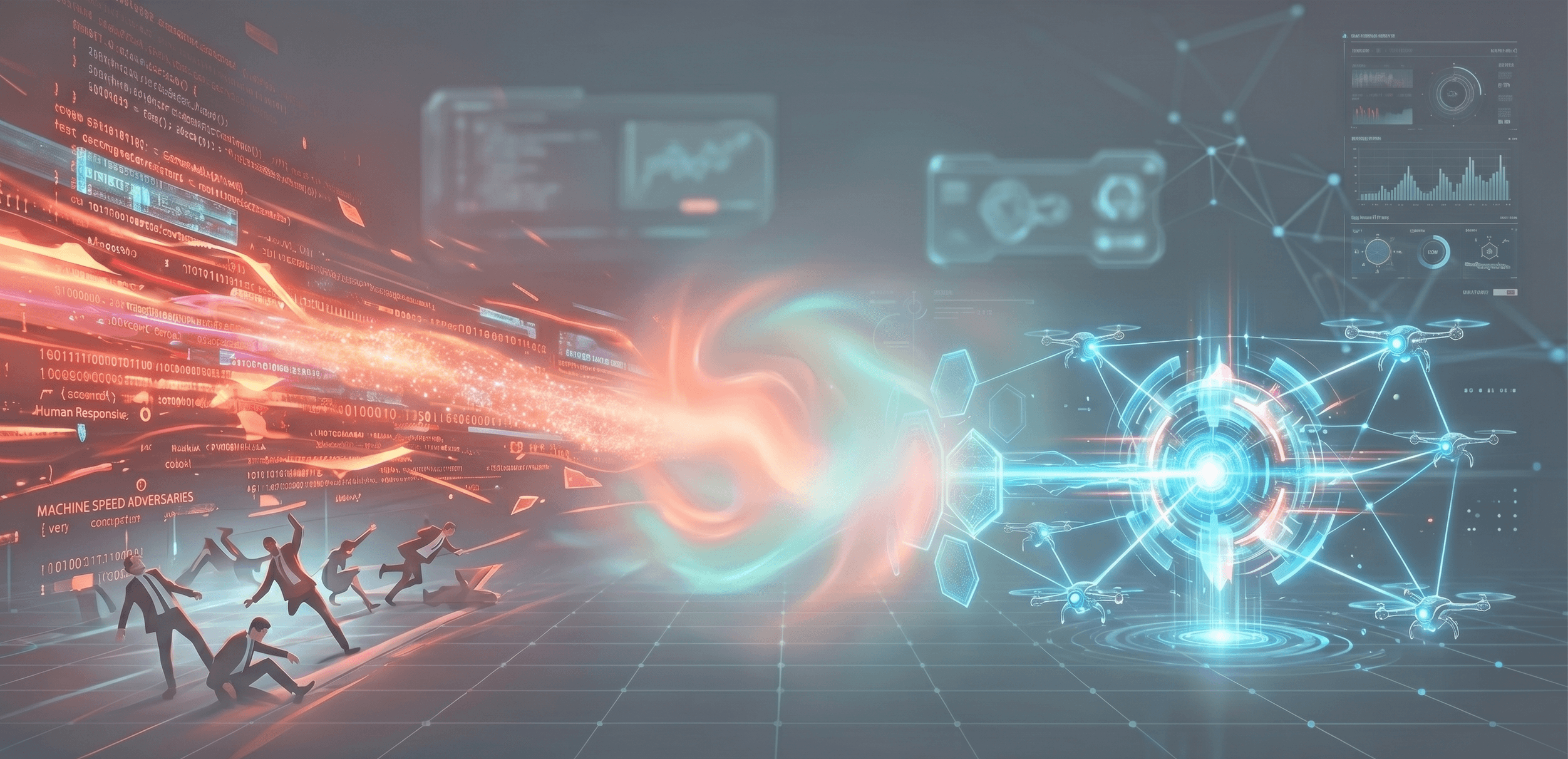
During the recent Cyware webinar, product leaders demonstrated how the traditional security operations center faces a critical bottleneck caused by legacy infrastructure, machine speed adversaries, rigid playbook automation, and fragmented threat feeds that routinely overwhelm human analysts. To defeat these modern autonomous threats, the session outlined the operational transition from reactive posturing to a proactive AI security operating system that unifies cyber risk intelligence and leverages goal driven autonomous agents.
This comprehensive recap details how specialized AI entities, including threat intelligence, contextual intelligence, incident reporting, and alias consolidation agents, work together to systematically eliminate data noise. By implementing a modern threat intelligence platform powered by an advanced risk scoring engine and real-time threat decay calculations, organizations can successfully bridge foundational tier-one triage with advanced threat hunting to shrink typical two-hour investigations down to ten minutes. Ultimately, adopting a collaborative framework for collective defense allows the modern enterprise to automate reasoning loops, scale operational defenses, and achieve machine speed threat conclusion.
How do security operations defend against autonomous AI driven cyberattacks at machine speed
Defenders are no longer fighting at human speed. Recent threat research highlights that advanced cyberattacks are now executed almost entirely, up to 90 percent, by adversarial AI. These automated threats conduct reconnaissance, map lateral movement, exploit identity privileges, and exfiltrate data autonomously within milliseconds. By launching thousands of rapid API lookups, these machine driven attacks easily bypass traditional user agent guardrails.
To counter this onslaught, security leaders must look past superficial market trends and avoid vendor agent washing, which merely rebrands old static scripts as artificial intelligence. True defense requires a comprehensive cybersecurity AI framework that handles threat intelligence management effectively. To discover the strategic blueprints for protecting your enterprise from these automated vectors, read the complete guide on how to protect your organization with the Cyware resources on cybersecurity AI for threat intelligence management and how to protect your ecosystem. By implementing a unified cyber risk intelligence model, organizations can transform raw threat data into the actual instinct of defensive systems.
What are the best use cases for goal oriented AI agents in a modern SOC
Goal oriented AI agents directly resolve the signal to noise problem by executing specialized security operational procedures autonomously. The deployment of a specialized agentic ecosystem includes four core pillars:
Threat Intelligence Agent: Automatically normalizes, deduplicates, and extracts vital technical indicators from complex datasets.
Contextual Intelligence Agent: Connects disparate internal and external infrastructure data to reveal hidden infrastructure relationships.
Incident Reporting Agent: Generates comprehensive executive threat briefings in seconds by combining structured indicators with unstructured threat data.
Alias Consolidation Agent: Resolves the industry wide confusion of a single threat actor operating under dozens of different vendor names to ensure high confidence attribution.
These capabilities drastically accelerate threat triage. For an in-depth look at how these autonomous workflows transform incident response, security teams can explore the deployment of a dedicated SOC analysis agent to optimize automated workflows.
How to scale security operations and reduce threat triage times using an intelligent threat intelligence platform
Maximizing operational efficiency requires moving beyond passive data aggregation. Modern security operations centers must transition analysts from manual log stitching to strategic operational commanders who direct intent based defense. Rather than forcing teams to manually pivot across dozens of isolated consoles, a unified threat intelligence platform introduces immediate day-zero operations fueled by 400+ prebuilt integrations. To see how these integrations harmonize disparate security solutions, explore the advanced capabilities of the Cyware Threat Intelligence Platform (TIP).
A foundational pillar of this architecture is an advanced risk scoring engine featuring an industry leading decay component. Because threat relevance degrades rapidly over time, calculating the precise half life of a specific risk ensures that security teams prioritize active critical hazards rather than chasing stale historical alerts. This unified strategic approach effectively bridges foundational tier one triage with deeper advanced threat hunting operational capabilities. The practical result is a massive reduction in operational latency, shrinking a standard two hour investigation down to just ten minutes. Ultimately, defending at scale requires collective defense, sharing verified threat playbooks across enterprise community to amortize the rising cost of cybersecurity.
Take Control of Your Threat Landscape
The transition to an intelligent, threat-centric architecture is a strategic mandate for navigating the modern risk landscape. Transitioning away from manual decision making requires deploying goal driven agents that leverage autonomous reasoning loops.
Organizations ready to transform their security posture can visit the official Cyware AI resource hub to explore the underlying architecture, review implementation frameworks, or connect with product experts to schedule a tailored operational demonstration.
About the Author
Sachin Jade
Chief Product Officer, Cyware